About HEMI SPHERICAL KETTLES
HEMI SPHERICAL KETTLES
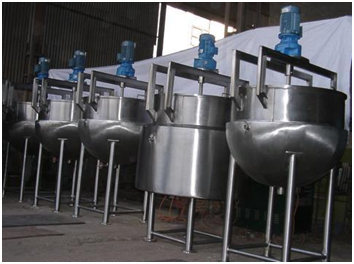
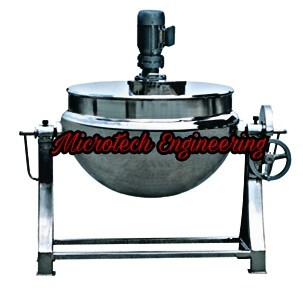
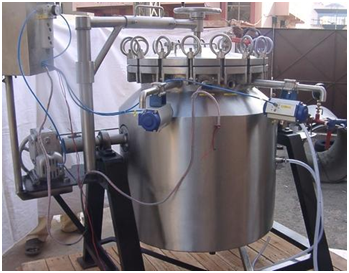
Among our other competitors active in the market of dairy processing equipment's, we are considered as the leading manufacturer and exporter of Steam Jacketed Kettle. All these kettles are widely used in the food industries for cooking varied items by steam heat. Available in different shapes and capacities of 75- 450 liters, these jacketed kettles are manufactured using supreme quality of metals and other components. Our clients can get this Steam Jacketed Kettle from us at cost effective prices.
FEATURES
- Rust proof finish
- Uniform steam heat to the materials
- Rugged design
Featuring double or triple jacketed insulation, these kettles efficiently handle both heating and cooling demands. High-grade insulation, combined with options for steam, oil, or water as the thermal medium, ensures uniform temperature distribution. Suitable for a wide range of process requirements, the jacket design elevates energy efficiency while maintaining product consistency and safety.
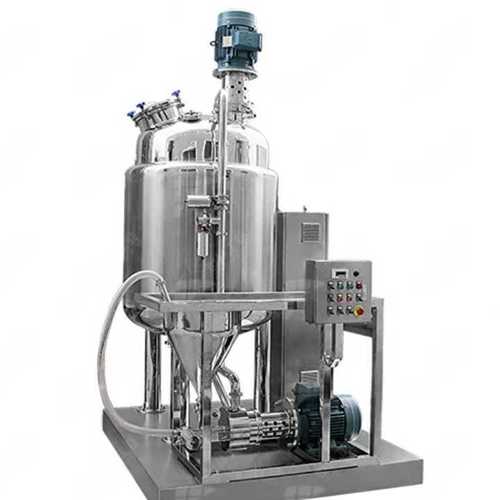
Customizable Agitation and Mounting SolutionsHEMI Spherical Kettles offer customized stirring mechanismsanchor, propeller, or paddle typesengineered for specific process needs. The mounting style can be tailored to installation environments, with options for leg, floor, or skid mounting. This flexibility supports seamless integration across various manufacturing or processing setups, enhancing overall operational efficiency.
Compliant Construction and User-Friendly FeaturesConstructed from SS 304/316 stainless steel with a hemispherical welded design, these kettles meet rigorous international standards including cGMP and ASME. Features like detachable/fixed lids, CIP/manual cleaning, manholes, and bottom discharge valves optimize ease of use, process control, and hygiene. Integrated instrumentation ensures real-time monitoring and safety for critical operations.
FAQs of HEMI SPHERICAL KETTLES:
Q: How do HEMI Spherical Kettles achieve uniform heating and mixing efficiency?
A: The hemispherical bottom, combined with robust agitation (anchor, paddle, or propeller), ensures consistent movement of contents for optimal mixing. The double or triple skin jacketing with insulation distributes heat or cooling medium (steam, oil, or water) evenly along the vessels surface, supporting uniform temperature control throughout the batch.
Q: What types of industries benefit from using these kettles?
A: These kettles are widely utilized in food processing, pharmaceuticals, chemicals, dairy, and cosmetics industries. Their compliance with cGMP, ASME, and other standards, along with hygienic construction and advanced process control, make them especially suitable for sensitive or regulated manufacturing environments.
Q: When is a triple skin jacket preferred over a double skin jacket?
A: A triple skin jacket is recommended for processes requiring enhanced insulation or more efficient thermal management, such as operations involving higher temperatures or extended processing. The extra layer further reduces energy loss and provides precise control, making it valuable for critical applications in pharmaceuticals or specialty chemicals.
Q: Where are manholes and ports located on the kettles, and what are their uses?
A: Manholes and ports are strategically placed for easy cleaning, charging ingredients, and connecting process instrumentation. These access points allow for effective maintenance, sampling, and integration of sensors (temperature, pressure), ensuring operational efficiency and process safety.
Q: What is the typical cleaning process for these kettles?
A: HEMI Spherical Kettles can be cleaned using CIP (Clean-In-Place) systems for automated sanitation or manually through provided manholes and ports. The mirror or matt inner surface finish helps in minimizing residue buildup, making routine maintenance faster and more effective.
Q: How does the discharge valve system benefit operations?
A: Each kettle is equipped with a bottom-mounted ball or butterfly valve to enable smooth, controlled discharge of product. This design reduces product retention, supports easier transfer, streamlines batch changes, and minimizes waste, ensuring hygienic and efficient operations.

 Send Inquiry



 Send Inquiry

 Send Inquiry

