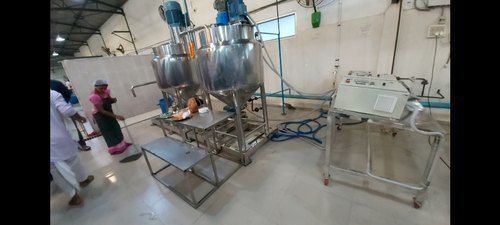
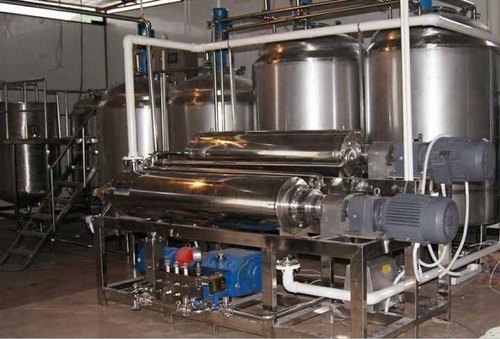
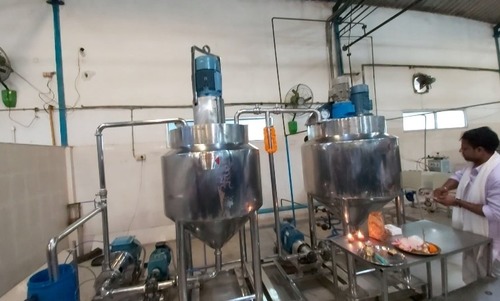
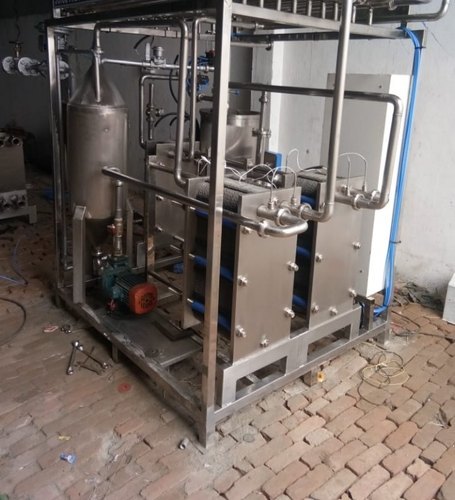
About Peanut Butter Manufacturing Plant
Application Scope:
The colloidal mill is widely applied in sorts of products of many fields by its advantage such as foodstuffs industry, medicine industry, chemical industry and everyday chemical industry etc.; the products including soybean milk, fruit jam, peanut butter, artificial corn milk, honey, tooth-paste etc.
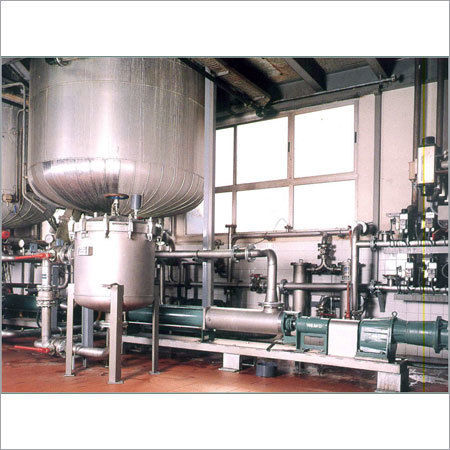
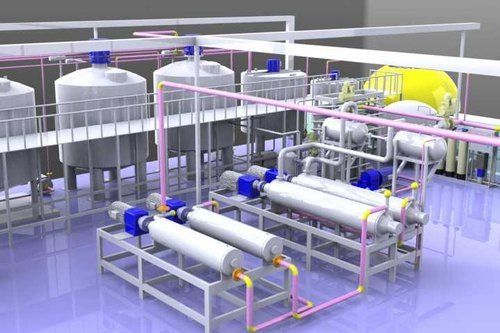
Flexible Texture Control: Smooth or Crunchy OutputExperience the versatility to produce both smooth and crunchy peanut or almond butter with ease. Adjustable grinding and mixing functions, combined with high shear mixing capabilities, provide total command over product texture. Switch between settings efficiently to suit varying market demands or customer preferences, all in a single, robust processing line.
Hygienic and Efficient CIP Cleaning SystemMaintain superior hygiene standards with the built-in Clean-In-Place (CIP) system. This automated cleaning process eliminates manual intervention, reducing downtime and labor costs while ensuring consistent cleanliness. Food-grade stainless steel construction further ensures compliance with food safety norms and extends the equipment's lifespan.
Seamless Automation and User-Friendly OperationHarness full-automation with a PLC-based control system, touchscreen HMI, and variable speed inverter drive. Operators can easily monitor, adjust, and optimize each stage of peanut butter production, from roasting, grinding, and mixing to packaging, ensuring maximal productivity and minimal error.
FAQ's of Peanut Butter Manufacturing Plant:
Q: How does the Peanut Butter Manufacturing Plant ensure food safety during production?
A: Food safety is maintained through the use of food-grade stainless steel (SS304/SS316) in all product contact parts and a Clean-In-Place (CIP) cleaning system for automated, thorough sanitation. The plant is designed with emergency stop and overload protection features, and all safety standards are upheld throughout operation.
Q: What types of nut butter products can be produced using this plant?
A: This manufacturing plant is suitable for making a variety of spreads, including peanut butter, almond butter, and tahini. The adjustable settings and high shear mixer allow for output texture customization (smooth or crunchy) as required.
Q: When should the CIP (Clean-In-Place) facility be used, and what is its advantage?
A: The CIP facility should be used after each production cycle or product changeover to ensure all product contact surfaces remain hygienic. Its advantage lies in significant time and labor savings, as it cleans internal components without dismantling the equipment, minimizing production downtime.
Q: Where can this peanut butter plant be installed and operated?
A: The plant is intended for indoor industrial environments and is designed to be floor-mounted. With its robust, corrosion-resistant construction and stainless steel finish, it fits seamlessly within modern food processing facilities in India or abroad.
Q: What is the process for switching between smooth and crunchy peanut butter production?
A: Switching between smooth and crunchy textures involves adjusting the grinder and mixer settings using the touchscreen HMI panel. The operation is automated, allowing for rapid changeover with minimal manual intervention, thanks to the PLC-based control system.
Q: How does the integrated packaging station enhance productivity?
A: The integrated packaging system enables direct filling of jars, pouches, or drums, streamlining the transition from processing to packaging. This setup reduces handling time, ensures product integrity, and increases throughput, contributing to high productivity and efficient logistics.
Q: What are the benefits of the modular belt conveyor and automatic feeding hopper?
A: The modular belt conveyor provides smooth, consistent product movement while accommodating cleaning and maintenance. The automatic feeding hopper ensures continuous, regulated supply of roasted peanuts, minimizing manual labor and maintaining process efficiency.

 Send Inquiry



 Send Inquiry

 Send Inquiry

