About Stainless steel flow diversion valve
Dairy flow diversion Valves
We are a trusted manufacturer and supplier of top grade Pumps and Process Control Instruments. With a premier aim to cater to the varied demands and requirements of our client in an efficient manner
Transfer Pump, Polypropylene Pump, Stainless Steel Self Priming Pump, Filter Pump, Magnetic Drive Pump, Dosing Pump and Process Control Instruments. All these products are developed in compliance with the international quality standards
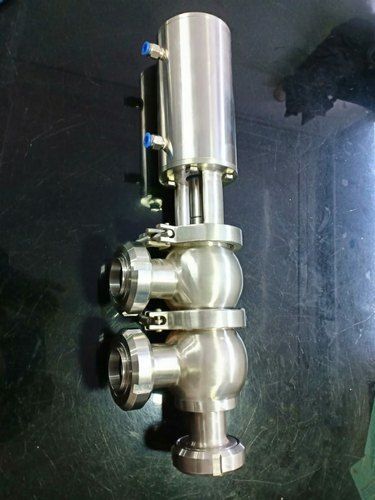
Superior Sanitary DesignThe valve's mirror polished surface (Ra < 0.8 m) and sanitary-grade construction make it ideal for applications demanding high purity. EPDM, PTFE, and Silicone seals are FDA approved, ensuring safe contact with consumables and pharmaceuticals while minimizing contamination risks.
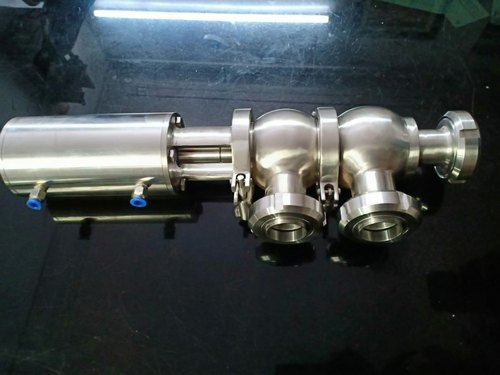
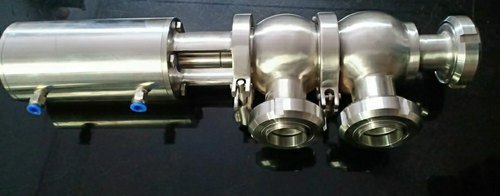
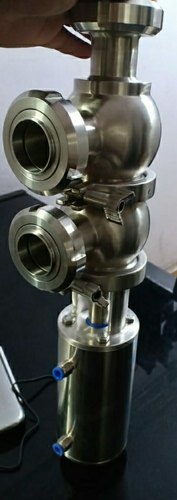
Flexible Installation & OperationEngineered for both vertical and horizontal mounting, the valve accommodates varied system configurations. Choose between manual or pneumatic control, with stainless steel or plastic actuators, to match operational needs. Tri-Clamp and flanged connections allow for easy integration.
Efficient Cleaning & MaintenanceDesigned for simple maintenance and cleaning, the valve is fully compatible with Clean-in-Place (CIP) and Sterilize-in-Place (SIP) procedures. Its sanitary construction minimizes downtime, enhances hygiene, and supports stringent industry standards.
FAQ's of Stainless steel flow diversion valve:
Q: How is the stainless steel flow diversion valve cleaned and maintained?
A: The valve supports CIP (Clean-in-Place) and SIP (Sterilize-in-Place) cleaning methods, allowing for efficient, automated sanitization without the need for disassembly. The sanitary design further simplifies maintenance and reduces downtime.
Q: What industries benefit most from using this flow diversion valve?
A: This valve is widely used in food, beverage, dairy, pharmaceutical, and chemical industries due to its compliance with rigorous sanitation standards and reliable performance in liquid flow diversion.
Q: When should I choose a Tri-Clamp versus a Flanged end connection?
A: Tri-Clamp connections are ideal for processes requiring easy assembly and cleaning, while flanged ends offer robust, secure connections for installations where high pressure or heavy-duty reliability is necessary.
Q: Where can this valve be installed within a process system?
A: The valve is designed for flexible installation in both vertical and horizontal orientations. It can be integrated at diversion points in pipelines to reroute or control liquid flow, depending on process requirements.
Q: What is the maximum capacity and pressure the valve can handle?
A: Depending on the model and piping configuration, the valve can manage flow rates up to 40,000 L/h and withstand inlet/outlet pressures of up to 10 bar.
Q: How does the actuator operate in pneumatic models?
A: For pneumatic operation, the actuator (made from stainless steel or plastic) uses air pressure to automatically switch the valve positions. The actuator operates on 24V DC or 220V AC, consuming less than 100 W of power.
Q: What are the benefits of selecting FDA-approved seal materials for this valve?
A: Using FDA-approved EPDM, PTFE, or Silicone seals ensures compliance with hygiene and safety regulations, reducing risk of contamination in sanitary applications while providing robust chemical and temperature resistance.

 Send Inquiry



 Send Inquiry

 Send Inquiry

