About Conical Spring Seal
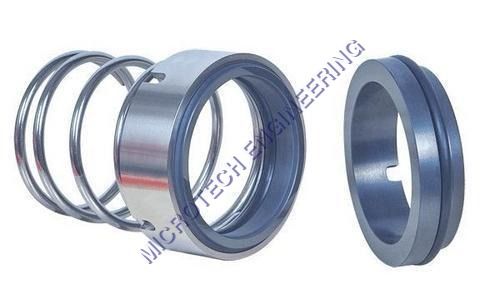
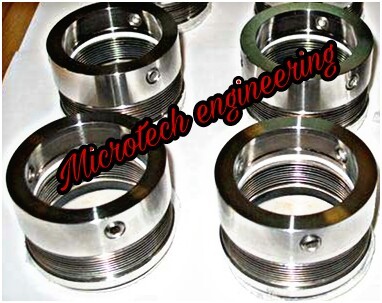
Conical Spring Seal
Specifications:
- Pressure: <=10 Bar
- Temperature: -20Oc To 180Oc
- Velocity: <=16 M/Sec
- Axial Movement: 1.0 Mm
- Seal Size: 10 Mm To 75 Mm
- Seal Characteristic: Single Acting, Inside Mounting, Depending Of Direction Of Rotation, Unbalanced
Conical Spring Seal
Our Comprehensive Range Of Single Coil Conical Spring Seals Are Extremely Rugged And Reliable Therefore Used For Various Sealing Applications In :
- Circulation Pumps
- Gear
- Water Pump
- Mercerizing Machines
- Chemical Process Pump
- Dairy Pump
These Conical Spring Seals Have Very Few Parts And Hence Can Be Easily Assembled Or Dismantled. Due To Single Spring Design It Is Very Useful For All Type Of Liquids.
Reliable Leakage PreventionThis conical spring mechanical seal effectively prevents fluid leakage, safeguarding equipment and promoting operational safety. Its bidirectional design maintains sealing integrity regardless of shaft rotational direction, making it suitable for diverse mechanical systems.
Advanced Material SelectionChoose from carbon, stainless steel, silicon carbide, tungsten carbide, and various elastomers like Viton, EPDM, Nitrile, or PTFE to enhance corrosion resistance and durability. Material options allow customization based on application needs and environmental challenges.
Effortless Installation and MaintenanceEngineered for easy mounting with a non-clogging structure, the seal supports quick installation and facilitates straightforward replacement of wearing parts. This reduces downtime and maintenance costs by simplifying the upkeep process for fabricators, manufacturers, and users alike.
FAQs of Conical Spring Seal:
Q: How is the Conical Spring Mechanical Seal installed?
A: Installation of the conical spring mechanical seal is straightforward due to its easy-to-mount design. The single conical spring structure allows for direct placement on the shaft without complex alignment, making it ideal for rapid setup.
Q: What materials are used in the seal faces and secondary seals?
A: Seal faces are available in combinations such as Carbon/SiC, Carbon/Ceramic, and SiC/SiC. Secondary seals are made from trusted elastomers such as Viton, EPDM, Nitrile, and PTFE, ensuring compatibility with various fluids and temperature ranges.
Q: When should wearing parts of this seal be replaced?
A: Wearing parts should be replaced during scheduled maintenance intervals or if leakage is detected. The design allows for easy replacement without needing to dismantle surrounding equipment, reducing downtime.
Q: Where can this mechanical seal be applied?
A: This seal is ideal for applications in pumps, compressors, agitators, and mixers found across industries including chemical, pharmaceutical, water treatment, and food processing. It accommodates shaft diameters from 10 mm to 100 mm.
Q: What benefits does axial movement compensation provide?
A: Axial movement compensation by the conical spring safeguards against shaft expansion and contraction, ensuring consistent sealing contact and minimizing wear under fluctuating operational conditions.
Q: How does material selection enhance corrosion resistance?
A: Corrosion resistance is achieved through careful selection of sealing faces and elastomers. Choosing carbon, silicon carbide, or tungsten carbide, alongside PTFE or Viton, tailors the seals resistance to harsh chemicals and varying process conditions.

 Send Inquiry



 Send Inquiry

 Send Inquiry

