About Syrup Transfer Pump
SYRUP TRANSFER PUMP
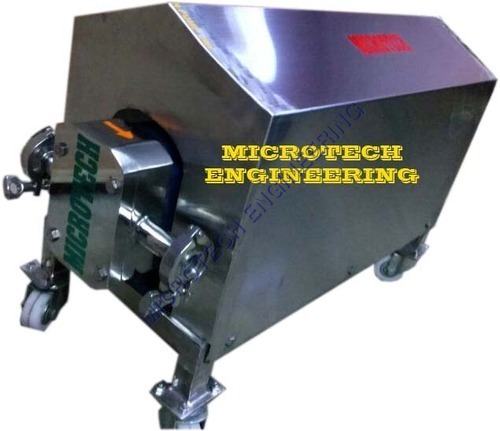
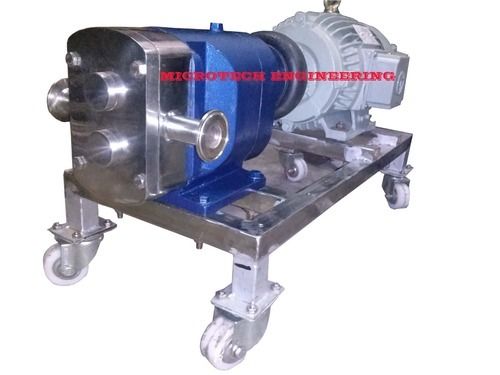
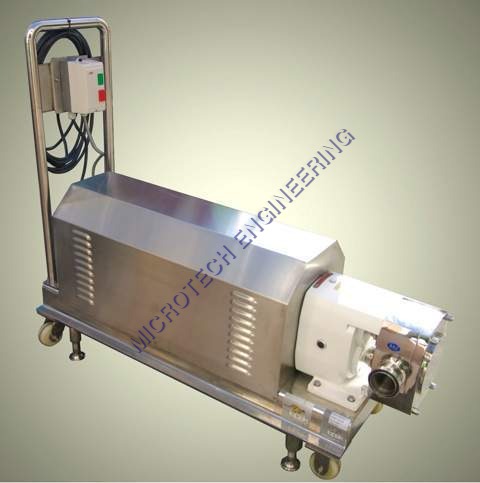
We are one-step ahead of our competitors in manufacturing and wholesaling a wide range ofl SYRUP TRANSFER PUMP. These find their wide application in various industries including food processing, beverages, dairy, pharmaceutical and many other allied industries. ergonomic design of these pumps reflect the hard labor and long research work of our experienced engineers. Besides, these pumps also ensure easy installation, corrosion resistance and long functional efficiency.
MICROTECH ENGINERING Lobe pumps are used in a variety of industries including, pulp and paper, chemical, food, beverage, Pharmaceutical, and biotechnology. They are popular in these Diverse industries because they offer superb sanitary qualities, high efficiency, reliability, corrosion resistance, and good clean-in-place and sterilize-in-place (CIP/SIP) characteristics.These pumps offer a variety of lobe options including single, biwing, tri-lobe (shown), and multi-lobe.Rotary lobe pumps are Non-contacting and have large pumping chambers, allowing them to handle solids such as cherries or olives without damage. They are also used to handle slurries, pastes, and a wide variety of other liquids. If wetted, they offer self- priming performance. A gentle pumping action minimizes product degradation. They also offer reversible flows and can operate dry for long periods of time. Flow is relatively independent of changes in process pressure, so output is constant and continuous.
How Lobe Pumps Work Liquid flows into the cavity and is trapped by the lobes as they rotate.
Lobe pumps are similar to external gear pumps in operation in that fluid flows around the interior of the casing. Unlike external gear pumps, however, the lobes do not make contact. Lobe contact is prevented by external timinggears located in the gearbox. Pump shaft support bearings are located in the gearbox, and since the bearings are out
of the pumped liquid, pressure is limited by bearing location and shaft deflection.
Specifications:
- As the rotors start to rotate, an expanding cavity is formed by rotation of the lobes which creates a vacuum at the inlet port, drawing liquid in pumping chamber.
- The product liquid is carried between the lobes and positively displaced, thereby sealing itself against the internal faces of the pump casing.
- The other lobe chamber is filed with the product liquid and about to commence it's discharge cycle.
- Finally the product liquid is forced or pressed out of discharge port of the pump in continuous smooth flow and pressure generated by the meshing of the lobe rotors
Advantages
- Pass medium solids
- No metal-to-metal contact
- Superior CIP/SIP capabilities
- Long term dry run (with lubrication to seals)
- Non-pulsating discharge
Disadvantages
- Requires timing gears
- Requires two seals
- Reduced lift with thin
Efficient and Hygienic Transfer SolutionThe Syrup Transfer Pump brings together hygienic design and advanced engineering to safely handle various liquid food applications. Its stainless steel construction and sanitary surface finish minimize contamination risks. A self-priming system enables fast startup and reliable suction, while compatibility with CIP/SIP cleaning supports stringent sanitation protocols. Designed for low noise operation and corrosion resistance, it delivers high performance in demanding environments including food processing and beverage industries.
User-Friendly Installation and OperationChoose from inline or floor-mounted models with Tri-Clamp or threaded connections for seamless integration into your process line. This pump is available in both portable and stationary variants, allowing flexible usage and relocation as needed. Manual control systems make operation straightforward for operators, while its light weight (1435 kg depending on model) streamlines setup and maintenance without extensive training.
FAQs of Syrup Transfer Pump:
Q: How does the Syrup Transfer Pump ensure hygienic operation for food applications?
A: The pump is manufactured using stainless steel (SS 304/316) with a matt or mirror polished surface finish. It complies with food grade and GMP standards, and its hygienic designalong with CIP/SIP cleaning compatibilityprevents contamination and supports thorough sanitation in beverage and liquid food processing.
Q: What are the installation options for this syrup pump?
A: You can install the pump either inline or as a floor-mounted unit, based on your processing requirements. Additionally, it supports both portable and stationary configurations, making it adaptable for various factory layouts and operational needs.
Q: Where is the Syrup Transfer Pump typically used?
A: This pump finds widespread use in syrup, beverage, and liquid food industries. It is suitable for processing lines and production areas where low to medium pressure liquid transfer is required, meeting stringent hygiene and GMP standards essential for food manufacturing in India and beyond.
Q: What is the process for cleaning the Syrup Transfer Pump?
A: The pump is compatible with Clean-In-Place (CIP) and Steam-In-Place (SIP) cleaning methods, allowing for thorough internal sanitation without disassembly. This feature ensures compliance with hygiene requirements and reduces downtime for cleaning.
Q: How does the pump handle varying operational demands such as flow rate and suction?
A: With a self-priming design, positive suction, and variable impeller (open/semi-open) options, the pump can deliver up to 100 LPM flow and a maximum suction distance of 7 meters. Its centrifugal theory and mechanical seal provide steady, reliable operation even under demanding conditions.
Q: What benefits does the TEFC motor and IP55 protection class provide?
A: The TEFC (Totally Enclosed Fan Cooled) motor ensures durability and minimizes exposure to dust, moisture, and external contaminants. The IP55 protection class further shields the pump from ingress, making it reliable for continuous use in the food industrys challenging environments.
Q: What are the main advantages of choosing this pump for syrup transfer in India?
A: Operators benefit from easy cleaning, high corrosion resistance, low noise, and robust sanitary standards. With dealer, distributor, exporter, and support networks across India, sourcing, maintaining, and integrating this pump into food-grade operations is efficient and dependable.

 Send Inquiry



 Send Inquiry

 Send Inquiry

