About Stainless Steel Milk Pump
Stainless Steel Milk Pump Description
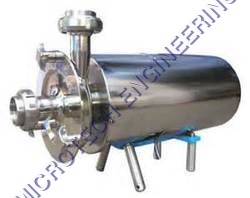
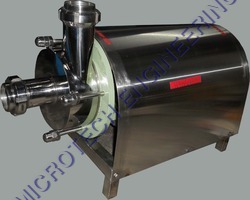
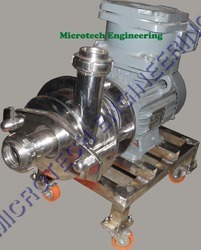
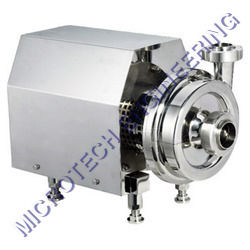
Stainless Steel Milk Pump is a hygienic sanitary centrifugal pump specially designed for the smooth and efficient transfer of milk and other liquid dairy products. Its stainless-steel construction and sanitary design help maintain product purity while providing reliable and continuous pumping performance.
The pump is suitable for applications requiring gentle product handling, easy cleaning, and corrosion resistance, making it ideal for dairy and food-processing industries.
Key Features
- SS304 / SS316 stainless-steel construction
- Hygienic sanitary design
- Smooth internal surface for easy cleaning
- Suitable for CIP cleaning systems
- Tri-Clamp / sanitary connection options
- High-efficiency centrifugal impeller
- Low-maintenance mechanical seal arrangement
- Compact and robust construction
- Available with different motor capacities and flow rates
Applications
- Milk transfer
- Dairy processing plants
- Cream and buttermilk transfer
- Yogurt and liquid dairy products
- Milk chilling and storage systems
- Cheese and butter processing
- Food & beverage processing
- Liquid product transfer
MICROTECH ENGINEERING Stainless Steel Milk Pumps can be customized according to required flow rate, head, motor HP, product temperature, connection size, and SS grade.
Superior Hygiene and DurabilityManufactured from robust food-grade stainless steel, this milk pump offers excellent resistance to corrosion and ensures contamination-free operation. The meticulously hygienic design and food-grade seals comply with global dairy and food safety protocols, guaranteeing not only product purity but long-lasting equipment performance.
Versatile and Efficient OperationEquipped with a centrifugal, self-priming mechanism and standardized fittings, the pump seamlessly integrates into diverse milk transfer lines. It supports both manual and automated control systems, accommodating a broad spectrum of processing environments and operator preferences.
Easy Maintenance and CleaningThe pump's smooth, stainless surfaces and self-priming design simplify cleaning and maintenance procedures. Mounted securely on adjustable stands, it assists dairy professionals in upholding stringent sanitary conditions, minimizing downtime, and sustaining operational efficiency.
FAQ's of Stainless Steel Milk Pump:
Q: How does the self-priming feature benefit milk processing operations?
A: The self-priming design enables the pump to automatically remove air from the lines and draw milk efficiently, reducing manual intervention and start-up time. This feature enhances productivity and ensures a continuous, hassle-free flow during processing.
Q: What standards and regulations does the Stainless Steel Milk Pump comply with?
A: This pump adheres to internationally recognized food and dairy standards such as FDA and EHEDG, ensuring its suitability for processing milk and other consumables in compliance with hygiene and safety requirements.
Q: When should the seals and fittings be inspected or replaced?
A: Regular inspection is advised as part of your plant's preventive maintenance schedule. Seals should typically be checked every few months or according to manufacturer guidelines, depending on the frequency and intensity of usage, to prevent leaks and maintain sanitary operation.
Q: Where is this milk pump typically installed within the dairy process facility?
A: The pump is commonly base-mounted on adjustable stands adjacent to milk storage tanks or transfer lines. Its standardized fitting design facilitates easy connection at critical points where milk needs to be conveyed hygienically within the plant.
Q: What is the recommended cleaning process for this milk pump?
A: Routine cleaning involves flushing the pump with clean water or food-grade cleaning solutions. Thanks to its stainless steel construction and smooth surfaces, it supports clean-in-place (CIP) systems for efficient sanitation without disassembly.
Q: Can the pump be customized for different voltage or control needs?
A: Yes, the pump can be configured to operate at standard voltages (typically 220V) or tailored to specific client requirements. You may choose between manual or automated control systems to match your facility's automation level.
Q: What are the main benefits of using a stainless steel milk pump?
A: Using this pump guarantees superior hygiene, reliable corrosion resistance, easy cleaning, and long operating life. It helps to minimize maintenance efforts while upholding strict food safety standards, vital for dairy and food processors in India.

 Send Inquiry




 Send Inquiry


 Send Inquiry


