
Call: 08071931448
 Send Inquiry
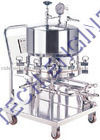
Microtech engineering offer LAB SCALE FILTRATION with candle cleaning system electrical flameproof
Technical Specifications
Model
No Of candles
4 nos
6 nos
Filtering candles
S S 316 1020 micron
S S 316 1020 micron
Outputltrshr
8001500 ltrs hr
20003000 ltrs hr
Liquid holding
0 after full transfer
0 after full transfer
Thickness of shell
3mm thick
3mm thick
Thick of top bottom cover
5 mm thick
5 mm thick
Length of candle
200 mm
200 mm
Inlet conical filter
6 dia x s S Mash
6 dia x s S Mash
Process inlet outlet
1 dia hose nipple
1 dia hose nipple
Direct use pump connection
1 bsp ball valve 1 hose nipple
1 bsp ball valve 1 hose nipple
Candle cleaning system
1 candle clean at a time
1 candle clean at a time
Pump mechanical seal
s S 316 PTFE
s S 316 PTFE
Pump motor
2hp 440 rpm 3 ph flameproof
3 hp 440 rpm 3 ph flameproof
Air vent safety valve
BSP
BSP
Drain valve
1 BSP
1 BSP
M O C
s S 304 l 316
s S 304 l 316
Finish
Polished to mirror finish
Polished to mirror finish
Salient Features
All contact parts made out of s S 304 l materialNo requirements of any filter pad filter
S S Candle for crystal clear filtration long lasting
Option pump can be use separately for water transfer or usually with the filter press
0 zero holding
Outer inner mirror finish buffing for easy cleansing
Easy opening fitting cleansing
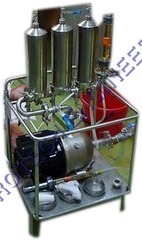

Price:
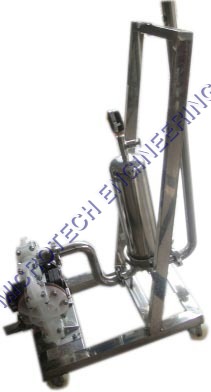
Price 67099.00 INR / Unit
Minimum Order Quantity : 1 Unit
Construction : Bag Filter
Medium Filter : Other
Mesh : STANDARD
Diameter : 25 TO 100 Centimeter (cm)
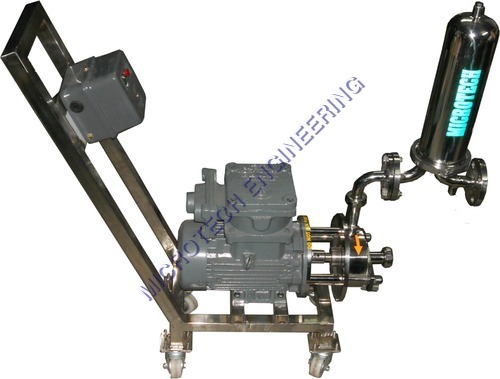
Price 45097.00 INR / Unit
Minimum Order Quantity : 1 Unit
Construction : Other
Medium Filter : Micro Fiber
Mesh : STANDARD
Diameter : 1 TO 15 Centimeter (cm)
Price 45120.00 INR / Unit
Minimum Order Quantity : 1 Unit
Construction : Cartridge Filter
Medium Filter : Other
Mesh : STANDARD
Diameter : 25 TO 100 Centimeter (cm)
Minimum Order Quantity : 1 Unit
Construction : Box Filter
Medium Filter : Other
Mesh : STANDARD
Diameter : 1 TO 50 Centimeter (cm)
GST : 07AASFM3267H1ZV
|


 Send Inquiry

 Send Inquiry

