About Hydraulic Actuated Double Diaphragm Pumps
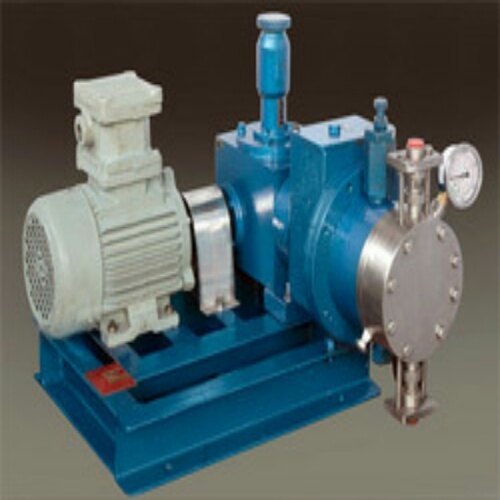
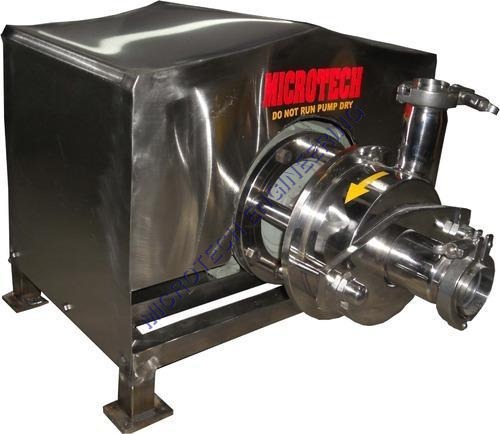
Microtech wide range of comprises of Hydraulic Actuated Diaphragm Pumps (MEMM-IIS1) which have been manufactured adopting superior quality raw material. These can be customized as per the specifications of our clients and have a long performing life.Liquid Contact Materials (Wetted Parts): PTFE Diaphragm
AISI 304
AISI 316
Monel
Alloy 20
Hast alloy B
Propylene
Hast alloy C
Titanium
GFT
PP
PTFE
PVCTechnical specifications and features of our pumps are:
| | Double diaphragm with reputure indication also available |
| | Can easily handle most of the liquids |
| | Simplex and multiplex arrangements of pumps available for universal use |
| | Heating or cooling jackets for liquid head available |
| | Pressure (Kg./Sq. Cm.) Max 80 |
| | Mini max make HD type diaphragm gland less pumps |
| | Leak free operation |
| | Flow rates of 0To 800 LPH, & High discharge pressures of 180 Kg/sq. cm. can be achieved |
| | Steady State metering accuracy of +/- 1% of pump output, at single setting of stroke from 10%-100% |
| | Reproducibility (Repeatability) better than +/- 1.5% of set point |
| | Inbuilt Pressure Relief & vacuum valve on the hydraulic side to safeguard system |
Engineered for Versatility and ReliabilityThese hydraulic actuated double diaphragm pumps are meticulously designed to handle demanding applications in chemical, pharmaceutical, and water treatment sectors. The option of various diaphragm materials and wetted parts ensures chemical compatibility, while the leak-free, dry-running capability guarantees safety and minimal maintenance. Their robust structure meets API 675 and ISO 9001 standards, ensuring reliability and longevity even in the toughest environments.
Flexible Configurations for Seamless IntegrationAvailable with both threaded and flanged connections, and suitable for baseplate or skid mounting, these pumps integrate easily into any plant setup. The control systems support manual, automated, or PLC-compatible operations, giving users flexibility in monitoring and operation. Built-in leak detection alarms and customizable discharge rates allow for enhanced process control and safety.
FAQ's of Hydraulic Actuated Double Diaphragm Pumps:
Q: How does a hydraulic actuated double diaphragm pump function?
A: These pumps use hydraulic fluid (typically high-quality mineral oil) to actuate a double diaphragm, creating suction and discharge in a reciprocating motion. This mechanism provides precise flow control and can handle highly viscous or abrasive fluids, making it suitable for demanding metering or transfer applications.
Q: What are the advantages of using PTFE, Teflon, EPDM, or Viton diaphragm materials?
A: Selecting diaphragm materials like PTFE, Teflon, EPDM, or Viton enhances chemical resistance, durability, and compatibility with aggressive or corrosive fluids. Each material is chosen based on the specific chemicals being pumped, ensuring safe and long-lasting operation with minimal maintenance requirements.
Q: When is it recommended to use a built-in leak detection alarm system?
A: A built-in leak detection alarm system is especially recommended in processes where hazardous or high-value fluids are being handled. It provides early warning of diaphragm failure or leaks, protecting personnel, equipment, and the environment while minimizing downtime.
Q: Where can these pumps be installed and used effectively?
A: These hydraulic diaphragm pumps are ideal for installation in chemical processing plants, pharmaceutical manufacturing, water treatment facilities, and petrochemical industries across India. Their robust design, self-priming capabilities, and corrosion resistance make them adaptable to various challenging environments.
Q: What is the process for maintaining these pumps, and how often is maintenance required?
A: Routine inspection of diaphragms, seals, and hydraulic fluid levels is recommended. However, due to their leak-free, low-maintenance design, major servicing is infrequent. Easy access to wet-end parts allows for swift maintenance, minimizing plant downtime and operational costs.
Q: What benefits do these pumps offer for chemical dosing and transfer?
A: They deliver precise and repeatable dosing (1.5% at set point), low noise levels (<70 dB(A)), dry running capability, and superior chemical resistance. The pumps operate at variable speeds and pressures up to 100 bar, accommodating diverse process demands efficiently and safely.

 Send Inquiry



 Send Inquiry

 Send Inquiry

