About SS Acid Transfer Pump
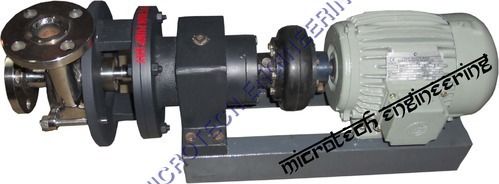
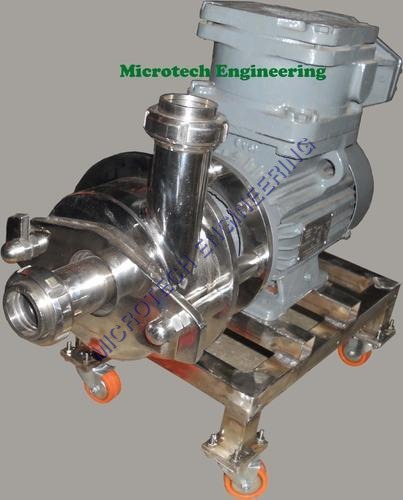
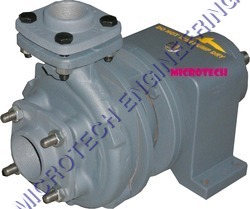
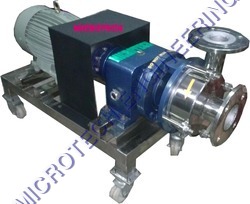
SS Acid Transfer Pump
STANDARD FUTURES :
Centrifugal single stage
Flange as per din standard
Back pull out design
Open / close impeller
Shaft sealing by single / doable mechanical seal
Sealed grease lubricated , deep grove ball bearing
The pump handle liquid having viscosities up to 1500 centrioles also with flame proof motor
OPTIONAL FUTURES :
Shaft sealing by gland packing
Bearing lubricating by oil
ANSI drilling on DIN flanges
Trolley mounting arrangement
Various type of connection
MATERIAL :
Casing : st. steel ( CF8 / CF8M )
Shaft : st. steel ( SS 410 / SS 316 / SS 304 )
Impeller : st. steel ( SS 410 / SS 316 / SS 304 )
Manufactured using SS 316 stainless steel, the pump withstands harsh corrosive environments. The semi-open impeller design enhances fluid transfer efficiency for a variety of aggressive acids. Its corrosion-resistant body ensures an extended service life, making it ideal for handling chemicals in demanding industrial settings.
Efficient and Adaptable PerformanceOperating at 220440V and compatible with both single and three-phase power supplies, this pump is highly adaptable to different site requirements. It delivers a robust flow rate of up to 4800 LPH, handles pressures up to 3 bar, and features a positive suction system capable of drawing fluids from up to 5 meters below. The self-priming function and 1 HP power ensure continuous and efficient operation.
Designed for Safety and ConvenienceThe pump incorporates heavy-duty bearings, IP55 protection grade, and Class F insulation for safe, reliable operation. With easy-to-maintain, base-mounted construction and ISI certification, users benefit from both safety and convenience. The mechanical seal minimizes leakage risks, while manual controls provide straightforward operationmaking maintenance and servicing straightforward for dealers and users alike.
FAQs of SS Acid Transfer Pump:
Q: How do I install and commission the SS Acid Transfer Pump for chemical applications?
A: The pump is base-mounted and requires secure fixing on a stable platform. Connect the 25mm inlet and outlet pipes, then wire the pump to a suitable 220440V power supply according to the phase type (single or three phase). Ensure all pipework is leak-proof and the system is primed before starting the pump for optimal operation.
Q: What types of chemicals can this pump safely handle?
A: This pump is engineered for a wide spectrum of corrosive chemicals, including hydrochloric acid (HCl), sulfuric acid (H2SO4), nitric acid, and other aggressive liquids. The SS 316 stainless steel construction and mechanical seal provide high chemical resistance, safeguarding the pump during prolonged corrosive service.
Q: When should I perform routine maintenance or repairs on this pump?
A: Routine maintenance is recommended at regular intervals, depending on the operating environmenttypically every six months. Check seals, bearings, and pump housing for signs of wear or leakage. The easy-to-repair design allows quick servicing, ensuring continued peak performance and minimizing downtime.
Q: Where is this acid transfer pump best utilized?
A: The pump is suitable for industries requiring safe transfer of acids and corrosive liquids, such as chemical processing plants, laboratories, and manufacturing facilities. Its robust design is ideal for field use across India, supported by manufacturers, exporters, and suppliers nationwide.
Q: What benefits does the semi-open impeller offer in acid transfer applications?
A: A semi-open impeller reduces clogging risk, enhances the pumps ability to handle viscous or particulate-laden chemicals, and ensures consistent flow. This design, coupled with positive suction and self-priming capabilities, facilitates reliable, uninterrupted pumping of challenging corrosive fluids.
Q: How does the pumps protection grade and insulation support safe operation?
A: With IP55-rated protection against dust and water ingress and Class F insulation, the pump ensures electrical safety and resistance to high temperatures. These features help extend equipment lifespan and safeguard operators in potentially hazardous, corrosive environments.

 Send Inquiry




 Send Inquiry

 Send Inquiry

